Sri Lanka’s wildlife reserves are extraordinary, varied and surprisingly easy to underestimate. Here’s how to choose the right one for your journey.
Sri Lanka is a genuinely remarkable wildlife destination – a small island that supports concentrations of wild animals, particularly leopards, elephants and waterbirds, that would be extraordinary in a country ten times its size. The national park system protects a diverse range of ecosystems from the coastal scrubland of the deep south to the remote dry-zone wilderness of the north-west. Understanding the differences between the parks is important – they are not interchangeable, and the right choice depends on what you most want to see, when you are travelling and how much time you have.
Yala National Park: The Leopard Capital of the World
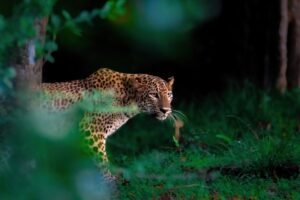
Yala is the name most people encounter first, and for good reason – it holds the highest density of wild leopards per square kilometre of any protected area on earth. The leopards of Yala’s Block 1 have been studied for decades, and many are habituated to vehicles sufficiently to allow close, extended observation rare in most leopard habitats. Beyond the leopards, Yala supports wild elephants, sloth bears, mugger crocodiles, water buffalo, sambar deer, peacocks and over 215 bird species including flamingos on the coastal lagoons. The best time to visit is between February and July when the dry season concentrates wildlife around water sources and thins the vegetation enough to improve sightings.
Udawalawe: The Best Place in the World for Wild Elephant Viewing
If seeing large numbers of wild Asian elephants in open terrain with near certainty is the priority, Udawalawe is the answer. Herds of 20 or more animals are commonly encountered at the reservoir’s grassy margins, moving freely through open landscape in golden morning light. The adjacent Elephant Transit Home – where orphaned calves are hand-raised before return to the wild – adds meaningful conservation context. Udawalawe lacks the dramatic leopard narrative and ecosystem variety of Yala, but for sheer elephant experience it is unmatched not just in Sri Lanka but in the world.
Minneriya and the Gathering: A Wildlife Spectacle Unlike Any Other
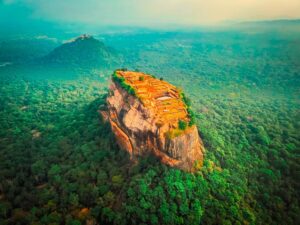
Between July and October each year, something extraordinary happens at Minneriya National Park. As the dry season deepens, hundreds of wild Asian elephants converge on the shrinking Minneriya reservoir in a phenomenon known as the Gathering. Concentrations of over 300 animals have been recorded in a single afternoon – family groups, bulls, juveniles and mothers with calves all moving to the shoreline to graze, socialise and bathe in a spectacle of natural abundance called the greatest wildlife show in Asia. Minneriya is located close to Sigiriya and Dambulla, making it a natural addition to any Cultural Triangle itinerary during the July to October window.
Wilpattu: Sri Lanka’s Most Atmospheric Safari Experience
For travellers who value the quality and character of a wildlife encounter over guaranteed headline sightings, Wilpattu offers something Yala and Udawalawe cannot: genuine remoteness, extraordinary stillness and the feeling of being in a wild place not yet discovered by the mainstream safari circuit. Sri Lanka’s largest park, Wilpattu is defined by its villus – natural shallow forest lakes that become focal points for an extraordinary concentration of wildlife as the dry season deepens. The park is known for leopards and sloth bears, but its defining quality is the silence of its interior, the depth of dry-zone forest and the feeling you might have the whole place to yourself.
Sinharaja: The Rainforest Alternative
Not every wildlife experience in Sri Lanka is a jeep safari. Sinharaja Rain Forest, a UNESCO World Heritage Site, offers a guided walking experience through one of the most biologically significant patches of forest remaining in South Asia – where the wildlife is overwhelmingly avian, amphibian and botanical. Sinharaja holds 22 of Sri Lanka’s 26 endemic bird species within a single day’s walking range, and a guided visit with an expert resident naturalist produces an encounter with the island’s endemic bird communities – in their primary habitat – that is available nowhere else on the island. Best visited between October and March.
How to Choose
The best national park for your Sri Lanka safari is the one that fits your dates, your routing and the specific wildlife experience you most want. Yala for leopards and maximum wildlife variety in a day. Udawalawe for hours with wild elephant herds in open terrain. Minneriya for the Gathering between July and October. Wilpattu for atmosphere, remoteness and the feeling of genuine wilderness. Sinharaja for birds, tropical ecology and the diversity of a primary rainforest. A well-planned Sri Lanka itinerary can comfortably include two or three of these experiences in a single trip, and most pair naturally with the cultural and coastal destinations that complete the full island picture.